Wind Direction - Kites Over Enid
What weather data can 2000 kite fliers collect within 30 seconds? This is the challenge.
Engaging Questions
-
How much does wind direction vary over a period of 30 seconds for a 200 by 200 foot area?
-
How does direct measured wind data compare to modeled MESONET data?
Teacher Goals
-
To collect the maximum number of observations for wind direct and "force" as possible during a 30 second period of time.
-
Compare observed wind direction with MESONET data for same period of time.
Required Resources
-
MESONET data to document wind speed and direction in order to compare with on-site observations. Download WeatherScope to view attached file.
Steps
-
Background: The Question
The challenge of this activity was to identify a question that participants would be able address by collecting observations during 30 seconds while flying a kit. The question is...How much does wind vary in speed and direction during a 30 second period of time.
-
Position
Each participant will receive a badge that identifies their specific location that they need to stand at during the kite flying. Below is a graphic of the grid locations. The badge grid number will need to be recorded in table listed below and later entered into online form provided below.
-
Wind Direction
When determining wind direction estimate for the 30 seconds, the average wind direction using following abbreviations. When there is not enough wind to lift the kite still go ahead to face into the light breeze and estimate the wind direction for 30 seconds.- N
- NNE
- NE
- ENE
- E
- ESE
- SE
- SSE
- S
- SSW
- SW
- WSW
- W
- WNW
- NW
- NNW
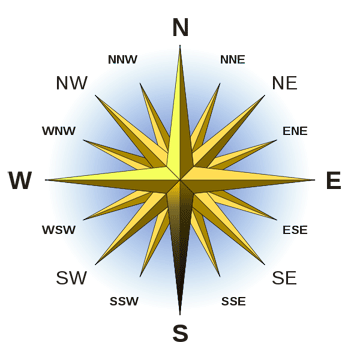
The image below shows orientation relative to map provided to participants on flight day.

-
Flight Force
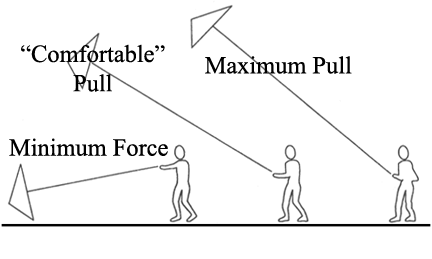
When determining wind force, estimate for the 30 seconds identify the "best" desciption of wind speed.- Little Force - There is wind but not enough to lift the kite.
- Minimum Force - There is just enough wind force to keep the kite up during the 30 sec.
- "Comfortable Pull" - There is enough wind force to keep the kite string tight, but not to hard to manage.
- Maximum Pull - There is enough wind force to make it difficult to handle the kite string.
-
Record Data
To record observations in field use the table below. Consider printing the attached table to get it on a single page. Use the online form "Kites over Enid" to share and pool data from all participants.
-
Compare to MESONET
Compare you observations with the wind direction "modeled" by MESONET software. Download the WeatherScope file already set for the time period kites are to be flown. May need to adjust time as needed. One may download WeatherScope software from www.mesonet.org.
Comments
Be the first to comment below.